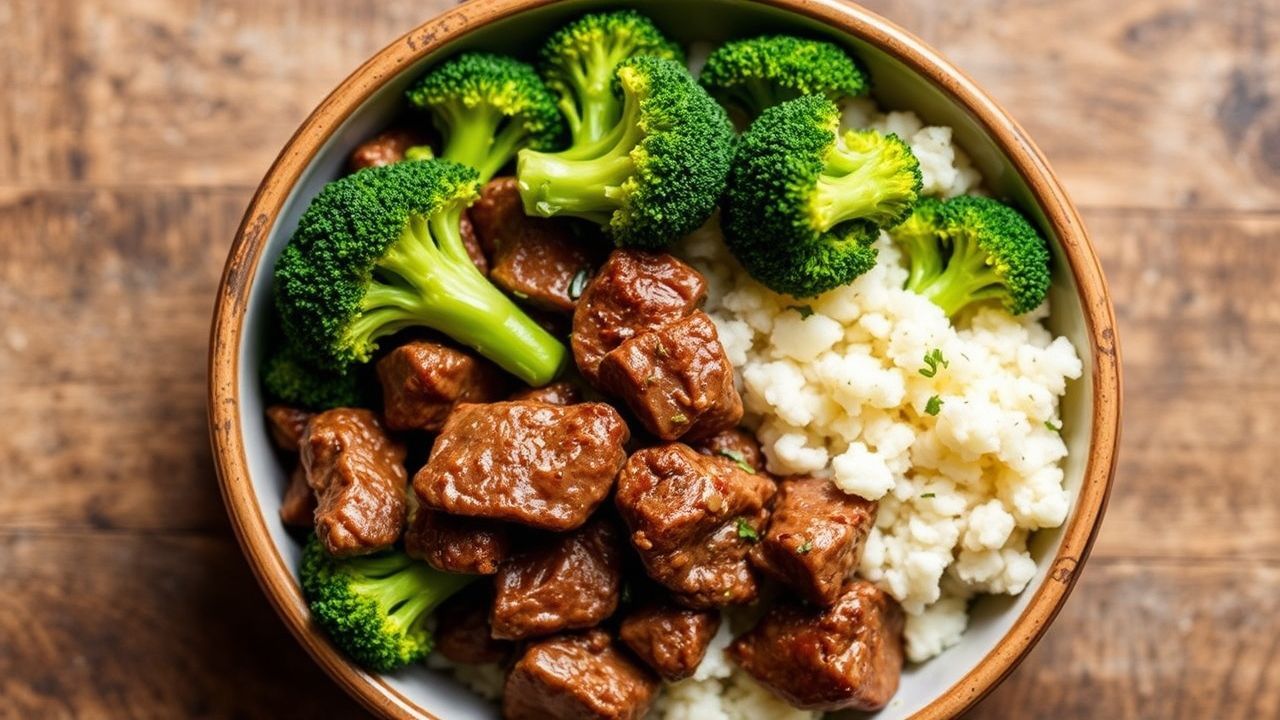

- Key takeaway: Ready in about 25 minutes with minimal prep.
- Diet fit: Low-carb, high-protein and adaptable to gluten-free needs.
- Technique: High-heat searing and fast stir-fry preserve texture and flavor.
- Make-ahead: Marinate up to 2 hours for deeper flavor.
Overview
This beef and broccoli dish adapts classic stir-fry technique for a ketogenic approach. I use lean beef, high-heat oil, and a sauce that avoids sugar while keeping umami depth.
The recipe links technique to outcome: fast searing locks juices, and brief vegetable cooking keeps crunch. For background on the protein used, consult the beef reference for cut characteristics and handling.
Prep and Cook Time
Preparation: 15 minutes. Keep mise en place organized: slice beef, trim broccoli, measure sauce components.
Cooking: 10 minutes. Searing and stir-frying on high heat keeps total hands-on time short and yields superior texture.
Yield and Difficulty
Serves 4 generous portions; adjust quantities to match portion needs. This scaling keeps macronutrient distribution stable for keto meal planning.
Difficulty: Easy. The method relies on timing and heat control rather than advanced knife skills, though a sharp knife speeds slicing for even results.
Ingredients
All ingredients support a low-carb profile while maximizing savory character. I recommend using tamari for a gluten-free option and erythritol or monk fruit as a non-glycemic sweetener.
- 1 lb (450 g) beef flank steak, thinly sliced against the grain
- 4 cups fresh broccoli florets, washed and trimmed
- 2 tbsp avocado oil or other high-smoke-point oil
- 3 cloves garlic, minced
- 1 tbsp fresh ginger, finely grated
- 1/4 cup tamari (gluten-free soy sauce)
- 2 tbsp oyster sauce (check ingredient labels for low-carb versions)
- 1 tsp sesame oil for finishing
- 1 tsp erythritol or preferred keto sweetener
- 1/2 tsp crushed red pepper flakes (optional)
- 2 green onions, thinly sliced
- 1 tbsp toasted sesame seeds for garnish
- Salt and freshly ground black pepper to taste
For vegetable context and nutritional info, see the broccoli entry. Consider swapping in other low-carb vegetables like bok choy or asparagus for variety.
Instructions
Preparation Steps
Freeze the flank for 15-20 minutes to firm it for uniform thin slicing. Slice thinly against the grain to shorten fibers and improve tenderness.
Trim broccoli into even bite-sized florets to ensure consistent cooking. Uniform pieces finish at the same time during high-heat stir-frying.
Cooking Procedure
Combine tamari, oyster sauce, sesame oil, erythritol, and red pepper in a small bowl; whisk to emulsify. Set this sauce aside until the final step so it heats quickly and coats ingredients evenly.
Heat a wok or heavy skillet over medium-high heat and add 1 tbsp avocado oil. When the oil shimmers, add beef in a single layer to sear—work in batches to avoid overcrowding.
Sear each batch 2-3 minutes until browned but slightly underfinished; remove to rest. Return the pan to heat and add the remaining oil, then sauté garlic and ginger 30 seconds until aromatic.
Add broccoli and stir-fry 4-5 minutes until vibrant green and tender-crisp. Return beef, pour in sauce, and toss to combine for 2-3 minutes until beef finishes and sauce thickens slightly.
Finish with sesame oil, green onions, and toasted sesame seeds. Taste and adjust salt and pepper just before serving to preserve delicate aromatics.
Technique Notes
High heat, hot pan, and small batches are the most critical variables for a glossy, well-seared result. Overcrowding lowers pan temperature and causes steaming instead of searing.
If you prefer a thicker sauce, add 1 tsp xanthan gum to the sauce off heat and whisk until dissolved, or reduce the sauce briefly over high heat. Both approaches thicken without adding carbs.
Tips for Success
Choose cuts like flank or skirt steak for flavor and quick cooking. These cuts develop strong sear and become tender when sliced thin and cooked briefly.
Avoid overcrowding the pan by cooking beef in batches; this step ensures proper browning and flavor development. Proper sear contributes significantly to perceived richness without extra fat.
Marinating for up to two hours enhances tenderness and seasoning penetration. If short on time, a 15-20 minute soak still yields noticeable improvement.
Serving Suggestions
Serve over cauliflower rice to keep the meal low-carb and filling. Cauliflower rice soaks up sauce and gives a rice-like base without added carbohydrates; for more on cauliflower, see cauliflower.
Complement with a fresh cucumber salad or quick pickled radishes to add acidity and crunch. Acidic elements balance fat and provide a refreshing contrast that improves satiety.
Variations and Substitutions
Swap beef for chicken or pork if preferred; adjust cooking times so the protein reaches safe internal temperatures without overcooking. For vegetarian options, use firm tofu pressed and seared, keeping sauce and technique the same.
For added heat, increase red pepper flakes or add a small amount of chili oil at the end. For more on the classic method behind this style, consult the stir-frying overview.
Nutritional Snapshot
This meal is high in protein, moderate in fat, and low in carbs—making it appropriate for ketogenic patterns when paired with low-carb sides. The following table summarizes typical per-serving values using the listed ingredients.
| Nutrient | Per Serving |
|---|---|
| Calories | 320 kcal |
| Protein | 35 g |
| Carbohydrates | 6 g |
| Fat | 18 g |
Practical Equipment
A heavy-bottomed wok or large skillet delivers even heat and fast evaporation, which preserves texture. Use tongs for rapid tossing and a sharp knife for precise, thin slices.
Keep a small bowl of water nearby to manage any occasional smoking or to loosen fond during sauce reduction. Efficient station setup reduces downtime and keeps heat consistent.
Insights and Conclusions
This recipe proves that efficient technique and ingredient choices produce restaurant-quality results at home. You get a high-protein, low-carb dinner that satisfies palate and macros without elaborate steps.
Consistency comes from controlling heat, portioning the pan, and finishing with balanced seasonings. Adopt these practices and you will replicate the dish reliably on a weekly basis.
FAQ
What makes this beef and broccoli keto-friendly?
The recipe excludes sugar and high-carb thickeners. It relies on low-carb sweeteners and umami-rich sauces to keep net carbs low while preserving flavor.
How can I speed this up for a busy weeknight?
Prep ingredients the night before: slice beef, trim broccoli, and mix the sauce. High-heat cooking then completes the dish in under 10 minutes.
Can I use other vegetables?
Yes. Use keto-friendly options like bok choy, asparagus, or green beans and adjust stir times. Harder vegetables need slightly longer initial cooking to reach tender-crisp texture.
Is marinating necessary?
Marinating is optional but helpful for flavor and tenderness. Even a short 15-20 minute marinade of tamari, garlic, and ginger improves mouthfeel and seasoning absorption.
How should I store and reheat leftovers?
Store beef and broccoli separately if possible to avoid soggy vegetables. Reheat gently in a skillet with a splash of water or broth to avoid dryness.

See also: Keto Beef