
“A superior sear is not luck; it’s technique—heat, dryness, and timing.” — J. Kenji López-Alt
10 Proven Amazing Steak Bites: Best Restaurant-Quality Garlic Butter Steak Bites You Can Master
Mastering steak bites starts with choosing the right cut and committing to high heat. This guide shows how restaurant-quality garlic butter steak bites achieve a deep crust, juicy interior, and pronounced garlic aroma that keeps guests asking for more.
- Restaurant-Quality Garlic Butter Steak Bites: Cultural Roots and Introduction
- Ingredients for Garlic Butter Steak Bites
- How to Cook Garlic Butter Steak Bites: Detailed Preparation Method
- Step 1 — Cutting and Temperature
- Step 2 — Drying and Seasoning
- Step 3 — Searing Technique and Basting
- Step 4 — Resting and Plating
- Nutritional Information per Serving for Steak Bites
- Expert Pro-Tips to Elevate Your Steak Bites
- Before vs After: What Restaurant Technique Changes Deliver
- Common Variations and Finishing Options for Steak Bites
- Serving and Pairing Recommendations for Steak Bites
- Conclusion: Serve Restaurant-Quality Steak Bites Consistently
- FAQ
- Choose well-marbled cuts that sear well and cook quickly for a consistent crust and fast cook times.
- Dry and season early to encourage the Maillard reaction and build bold flavor.
- Sear, baste, and rest to lock juices and balance texture like pro kitchens.
Restaurant-Quality Garlic Butter Steak Bites: Cultural Roots and Introduction
Steak morsels pan-seared in garlic butter trace back to rustic bistro menus and steakhouse small plates. Chefs turned bite-sized pieces into signature appetizers by applying high-heat technique, compound butter, and quick finishing steps—techniques found in tapas-style and bar menu offerings.
The format became popular because small portions concentrate flavor while letting kitchens serve hot, immediate plates. Professional kitchens rely on fast searing, flavored basting, and immediate plating to preserve heat, texture, and aroma.
Ingredients for Garlic Butter Steak Bites
Use top-quality beef and fresh aromatics for restaurant-level results. The list below gives approximate metric and imperial measures for four servings; scale as needed. Note: salt weight varies by grain size—adjust if you use fine table salt.
- 500 g (1.1 lb) beef (sirloin, ribeye, or tenderloin), cut into 1-inch cubes
- 2 tsp (≈10 g) kosher salt
- 1 tsp (≈5 g) freshly ground black pepper
- 2 tbsp (30 ml) neutral oil with high smoke point (grapeseed or canola)
- 4 tbsp (56 g) unsalted butter
- 4 cloves garlic, smashed and minced
- 1 tbsp (15 ml) fresh thyme leaves or 1 tsp dried thyme
- 1 tbsp (15 ml) fresh parsley, chopped for garnish
- Optional: 1 tsp (5 g) smoked paprika or ½ tsp (2.5 g) chili flakes for heat
How to Cook Garlic Butter Steak Bites: Detailed Preparation Method
Start by trimming and drying the cubes thoroughly. Pat with paper towels and air-dry in a single layer for 15–30 minutes to remove surface moisture and concentrate flavor; a drier surface equals a better sear.
Season early with salt (a short dry-brine) so it draws moisture out and then allows some reabsorption, improving the crust. This simple step measurably improves browning compared with salting only seconds before cooking.
Step 1 — Cutting and Temperature
Cut beef into uniform 1-inch cubes to ensure even cooking; inconsistent pieces cause overcooking or undercooking. If working from a large steak, slice across the grain and then into cubes to maximize tenderness.
Bring the cubes to room temperature for 20–30 minutes to reduce internal temperature variance and promote even medium-rare doneness. Do not leave raw meat out longer than two hours for food-safety reasons.
Step 2 — Drying and Seasoning
Pat cubes dry again just before cooking to remove condensation. Apply salt and pepper evenly; timing the salt lets it penetrate without extracting excessive surface water. For deeper seasoning, salt and rest for 30 minutes; if you need a last-minute option, season immediately and rely on aggressive searing.
Step 3 — Searing Technique and Basting
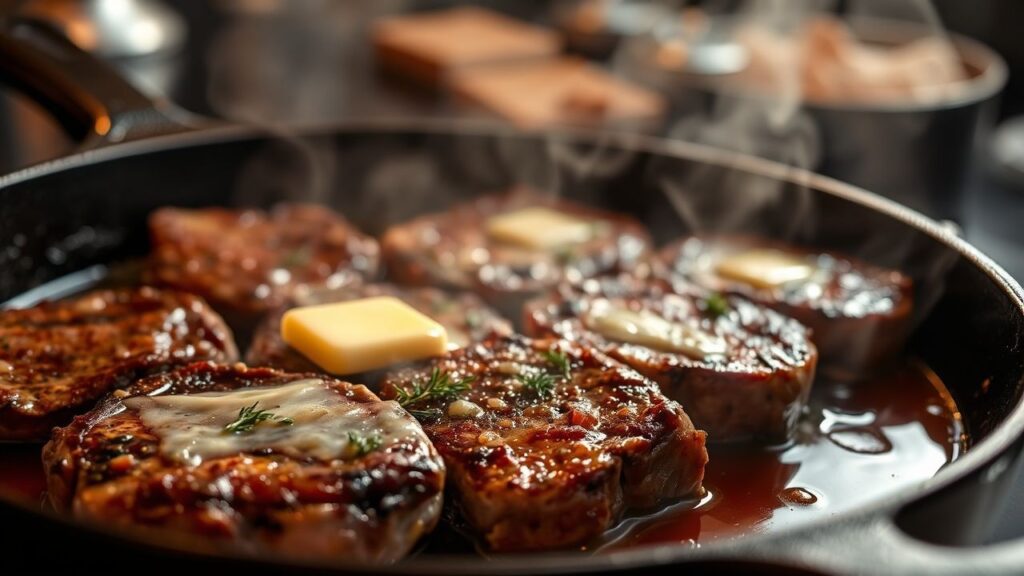
Preheat a heavy skillet until very hot—cast iron works best—then add the neutral oil. The oil should shimmer and start to smoke lightly before the beef hits the pan. Add beef in a single layer and avoid overcrowding; crowding lowers pan temperature and prevents crust formation.
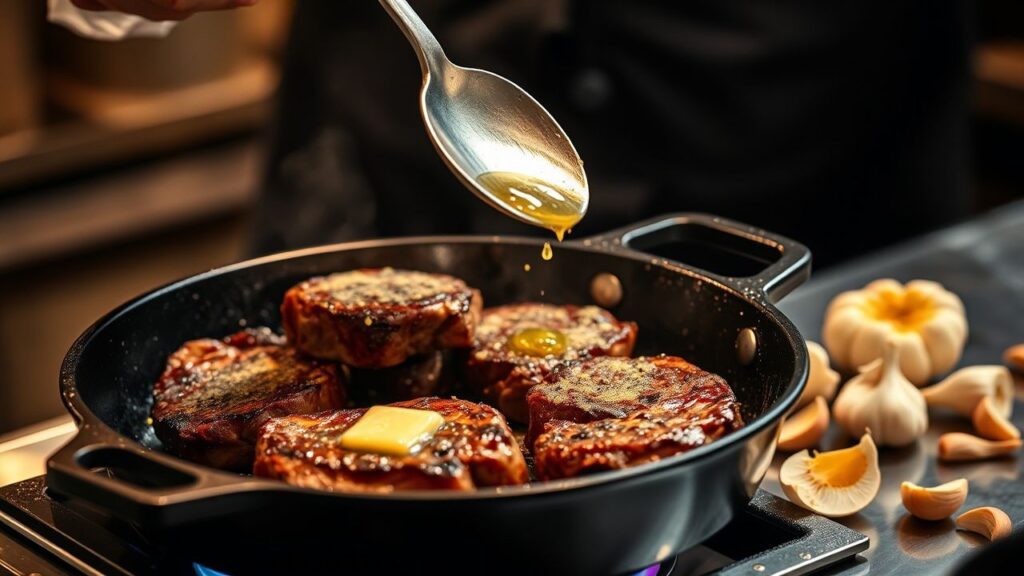
Sear without moving for about 60–90 seconds per side to form a crust, but adjust time based on cube size and how hot your pan runs. After the initial sear, reduce heat slightly, add butter, garlic, and thyme, then tilt the pan and spoon the hot butter over the bites for 30–45 seconds to finish and flavor the exterior.
Chef’s Note: Heat cast iron on medium-high to high for several minutes until very hot; a short test drop of water should sizzle and evaporate. Use an infrared or surface thermometer if available to familiarize yourself with your pan’s behavior. If the pan smokes excessively, lower the heat briefly and continue searing in batches to maintain high pan temperature.
Step 4 — Resting and Plating
Transfer steak bites to a warm plate and rest for 3–5 minutes. Even a short rest lets juices redistribute so each bite stays tender rather than leaking out immediately when cut.
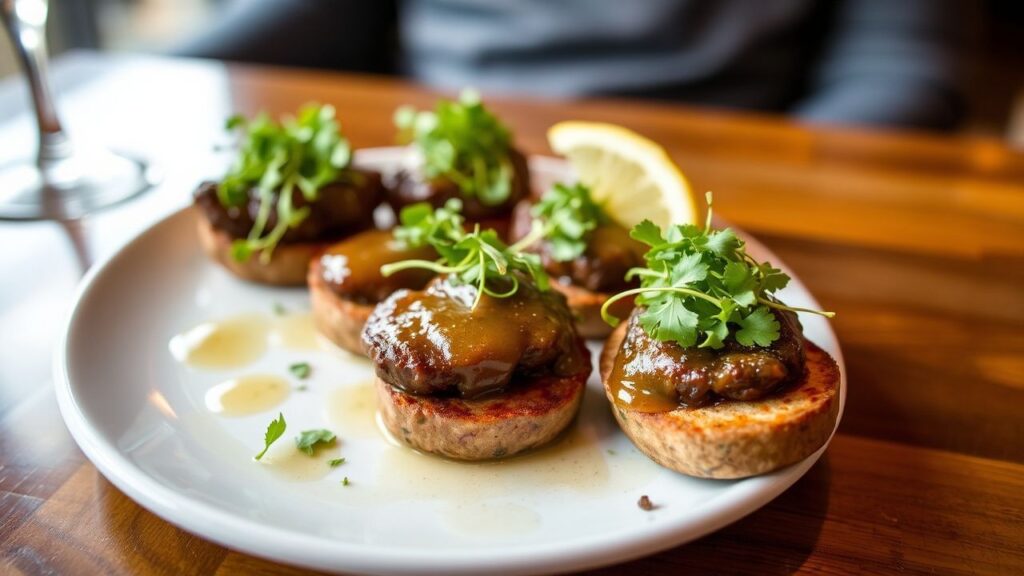
Finish with chopped parsley and a small drizzle of the reduced garlic butter from the pan for shine and aroma. Serve immediately for best texture and temperature; accompany with bread or a starch to catch the juices.
Nutritional Information per Serving for Steak Bites
Nutrition values vary by cut and portion. The following is an estimate per serving (four servings) using sirloin and the listed ingredients. Use these figures to adjust portions for dietary needs or menu labeling.
- Calories: ~420 kcal
- Protein: ~34 g
- Total Fat: ~28 g (Saturated Fat: ~11 g)
- Carbohydrates: ~1.5 g
- Sodium: ~680 mg
Expert Pro-Tips to Elevate Your Steak Bites
Small technique shifts create big flavor improvements. Professionals focus on texture contrasts, precise temperature control, and finishing touches that improve both taste and presentation.
These pro-tips are battle-tested in busy restaurant kitchens and will improve consistency and guest praise.
Marinate selectively: use acid sparingly—lemon or vinegar can tenderize but will change surface moisture and reduce sear quality. For a pure beef flavor, prefer a quick dry rub or simple salt, pepper, and garlic.
Consider compound butters: fold roasted garlic and herbs into softened butter and chill. Place a small pat on the bites just before serving for a glossy finish and layered flavor.
Before vs After: What Restaurant Technique Changes Deliver
Before: many home cooks crowd the skillet, under-season, and skip resting, leading to uneven doneness and muted flavor. After: pros sear in single layers, season ahead, and rest briefly for stable, juicy bites.
Follow the sequence—dry, season, high-heat sear, butter-baste, rest—and you’ll replicate restaurant quality consistently. Each step produces measurable improvements in texture, aroma, and visual appeal.
Common Variations and Finishing Options for Steak Bites
Vary herbs, spices, and finishing acids to suit your menu. Try rosemary, smoked paprika, chimichurri, or a squeeze of lemon at the end to brighten the dish.
For heat, add cayenne or serve with a roasted-garlic aioli. For a richer finish, fold blue cheese into warm butter and spoon it over the bites for an indulgent sauce.
Technique Deep-Dive: Searing requires a dry surface and a hot pan to maximize the Maillard reaction—surface browning that produces complex flavor. For background reading on the chemistry and physics behind searing, see searing on Wikipedia.
Serving and Pairing Recommendations for Steak Bites
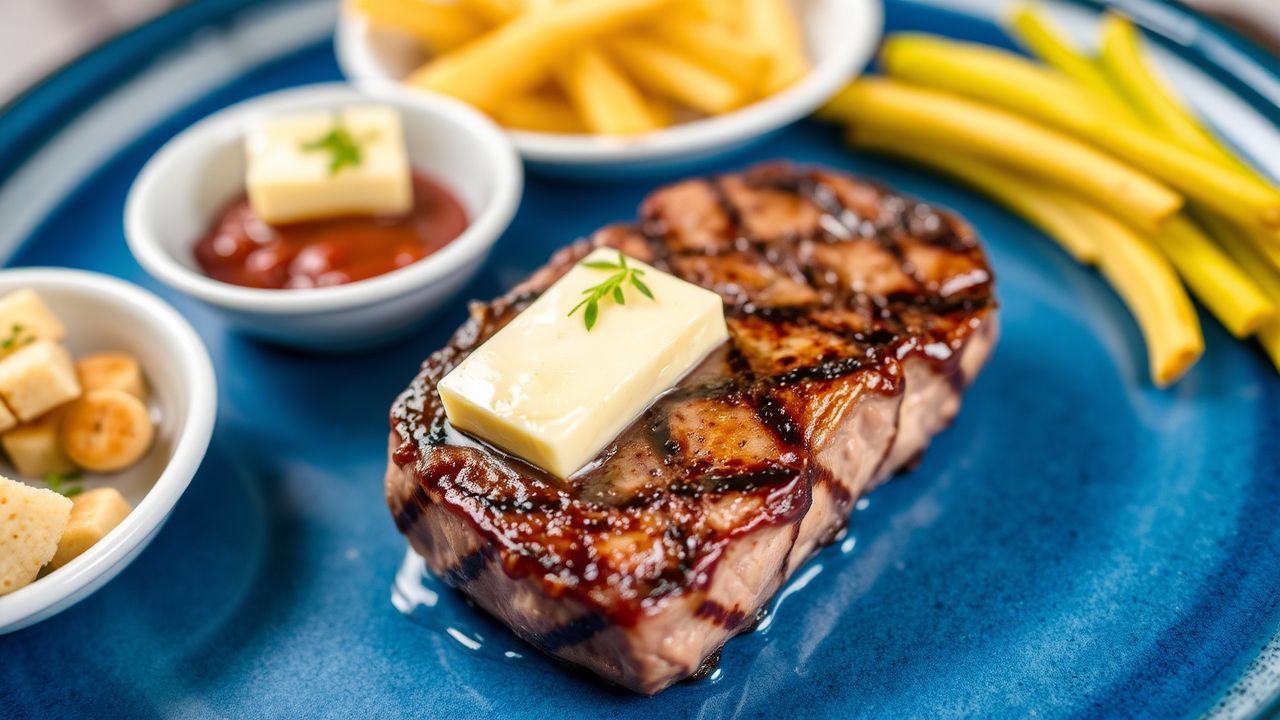
Serve garlic butter steak bites as a small plate with crusty bread or over creamy mashed potatoes to soak up juices. Balance richness with an acidic side like pickled red onions or a lemony arugula salad.
Wine pairings: medium-bodied reds such as Malbec or a peppery Syrah. Beer options: brown ale or amber lager to complement caramelized, savory notes.
Conclusion: Serve Restaurant-Quality Steak Bites Consistently
Reproducing steakhouse results at home starts with disciplined prep and heat control. Drying, uniform cutting, high-heat searing, and finishing with garlic butter are the core steps that deliver predictable excellence.
Practice the sequence and record your timings with your equipment. Small refinements—pan choice, batch size, or finishing herb—will produce a signature version worthy of a restaurant menu.
FAQ
How long should I sear steak bites for medium-rare?
Sear each side for about 60–90 seconds on high heat, adjusting for cube size and pan performance. Aim for an internal temperature of 130–135°F (54–57°C), pulling 3°F lower to allow for carryover. Rest 3–5 minutes before serving.
What cuts make the best steak bites?
Choose tender, well-marbled cuts like sirloin, ribeye, or tenderloin. Sirloin balances flavor and cost; ribeye adds richness from fat. Trim excess surface fat to reduce flare-ups and ensure even cooking.
Can I prepare steak bites ahead of time?
Partially: you can trim, cube, and season the beef up to 24 hours ahead (refrigerate). For best searing, pat dry immediately before cooking and bring to room temperature briefly. Fully cooked bites lose crust quality if reheated improperly.
How do I prevent garlic from burning while basting?
Smash garlic first, then add it after the initial sear when you drop the heat slightly. Spoon butter over the bites to baste, instead of letting garlic sit directly in very hot oil. Remove or reduce garlic if it begins to darken too quickly.
What sides pair best with garlic butter steak bites?
Creamy mashed potatoes, lemony arugula salad, roasted vegetables, or crusty bread are ideal. Offer a bright acidic component like pickled onions to cut through butter richness and refresh the palate.
See also: steak bites